Yara Günther · 12 September 2026
Adapting Content Strategies Following Major Platform Transitions in Niche Digital Services
Platform transitions in niche digital services often involve algorithm updates, policy shifts, or infrastructure changes that force content creators and service providers to revise their approaches, and researchers have documented several instances where these adjustments directly affect visibility and engagement metrics across specialized sectors such as health tech, educational tools, and professional networking platforms.
Understanding the Scope of Platform Transitions
Major transitions occur when dominant platforms alter their core systems, including ranking factors or content distribution rules, while data from industry reports indicates that niche digital services face amplified challenges because their audiences tend to be smaller and more targeted compared to general consumer markets. Observers note that transitions scheduled around September 2026, such as anticipated updates to certain content delivery networks and search indexing protocols, will require preemptive strategy reviews since these changes can alter how specialized content surfaces in results pages and recommendation engines. Those who've studied prior shifts know that preparation begins with mapping the specific platform components undergoing modification, and this process includes tracking API deprecations alongside user behavior pattern alterations.
Analyzing Effects on Content Performance
Content performance metrics shift noticeably after transitions because algorithms prioritize different signals such as user dwell time, interaction depth, and source authority, whereas studies from research institutions have shown that niche services experience steeper initial declines when their tailored material no longer aligns with new evaluation criteria. Experts have observed that services operating in regulated fields must also account for compliance layers that platforms introduce during transitions, and this adds layers of complexity to content formatting and distribution choices. Data shows that early monitoring of key performance indicators allows teams to identify which content types retain traction and which require reformatting or repurposing through new channels.
Developing Revised Content Approaches
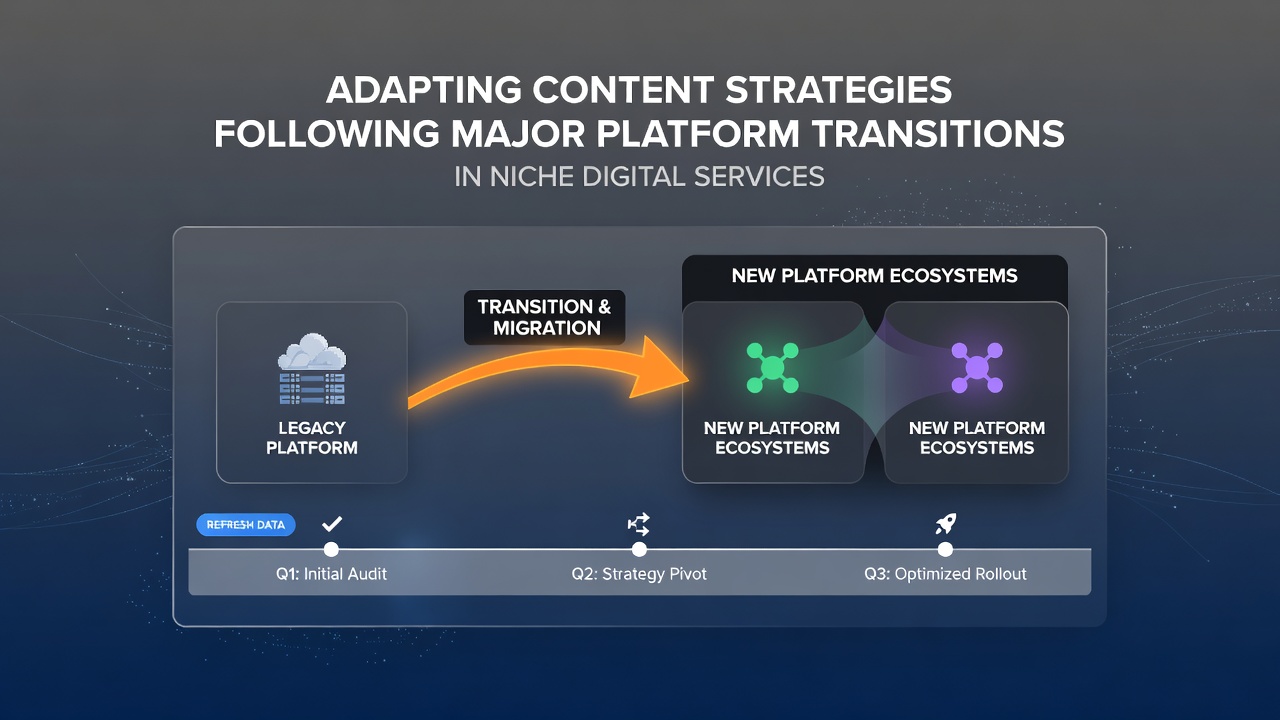
Teams adapt by first auditing existing content libraries against upcoming platform requirements, and this audit reveals gaps where material needs updating to meet revised metadata standards or multimedia integration rules. Researchers discovered that successful adaptations often incorporate modular content structures that permit quick reconfiguration without full rewrites, while industry organizations recommend testing variations through controlled distribution experiments before full rollout. What's interesting is how niche services leverage partnerships with complementary platforms to maintain audience reach during the adjustment period, and this tactic distributes risk across multiple ecosystems rather than relying on a single source of traffic.

Implementation involves cross-functional coordination between technical and editorial staff because platform transitions frequently blend content policy with technical specifications, and this integration ensures that new formats satisfy both user expectations and algorithmic preferences. Figures reveal that services investing in staff training on emerging platform features achieve faster recovery times, whereas those relying on outdated playbooks encounter prolonged visibility reductions.
Examples from Recent Transitions
One study revealed that a niche educational service restructured its video library into shorter, interactive segments after a major learning platform updated its engagement algorithms, and this adjustment restored previous traffic levels within three months. There's this case where experts found that a specialized health information portal shifted emphasis toward user-generated verification features following a social media network's policy overhaul, while data from the Competition Bureau Canada highlights similar patterns across digital marketplaces undergoing regulatory and technical updates. Those monitoring the space note that September 2026 transitions may introduce additional requirements around content transparency, prompting services to embed clearer sourcing and update mechanisms into their publishing workflows.
Monitoring and Iteration Processes
Continuous monitoring relies on platform-provided analytics combined with third-party tools that track ranking fluctuations, and this dual approach provides a fuller picture than either source alone. People who've implemented such systems report that weekly review cycles help catch emerging issues before they compound, whereas quarterly deep dives allow for strategic pivots based on accumulated performance data. According to reports from the Australian Competition and Consumer Commission on digital platform practices, transparency in how platforms communicate upcoming changes enables more accurate forecasting and reduces the scramble associated with sudden announcements.
Conclusion
Platform transitions in niche digital services demand systematic content strategy revisions that begin with thorough analysis and extend through ongoing monitoring and refinement, and evidence from multiple sectors demonstrates that proactive adaptation preserves reach and relevance. Services that integrate technical compliance with creative flexibility position themselves to navigate future shifts, including those projected for September 2026, with greater stability and sustained audience connection.