Gisela Brooks · 24 October 2026
Routine Technical Overhauls and Shifts in Session Completion Rates for Meditation Sound Collections
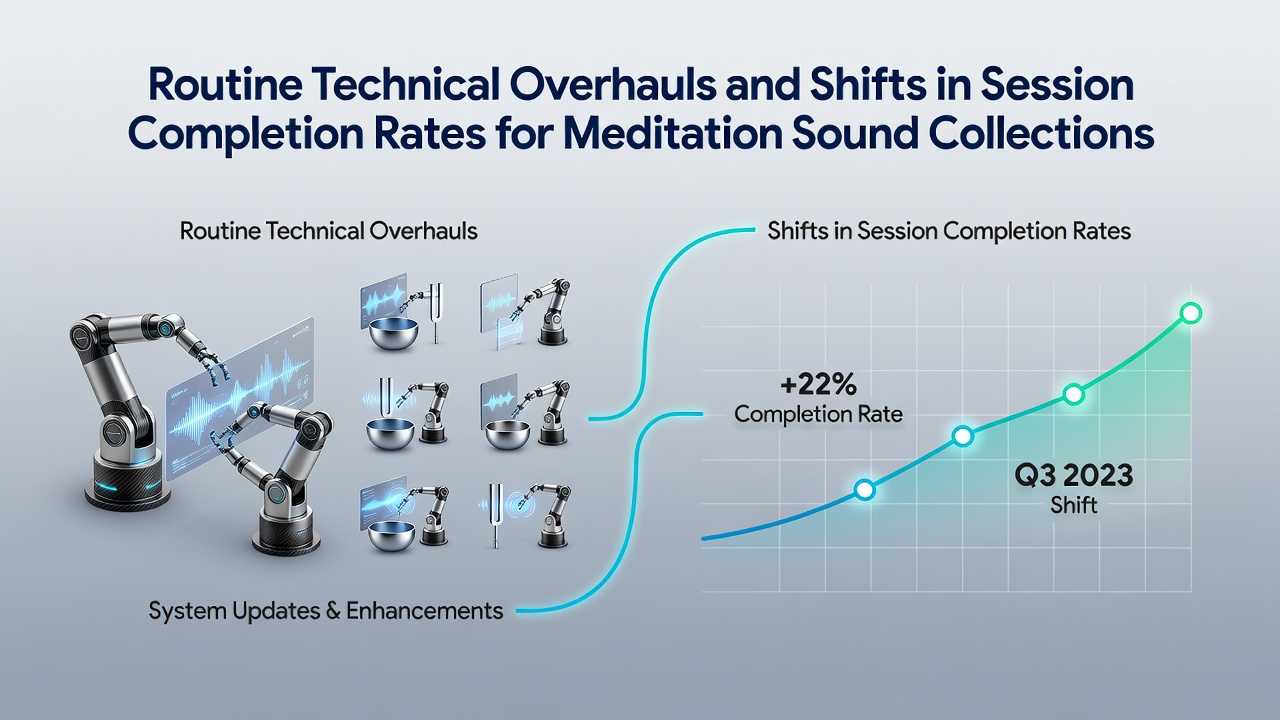
Meditation sound collections operate through digital platforms that deliver curated audio tracks for guided and ambient practice, and these systems undergo scheduled technical overhauls to maintain server stability, update encryption protocols, and refine audio compression algorithms. Observers note that such maintenance cycles occur quarterly in many wellness applications, with engineers focusing on backend migrations that can temporarily alter load times and streaming quality during user sessions.
Patterns Observed in Completion Metrics
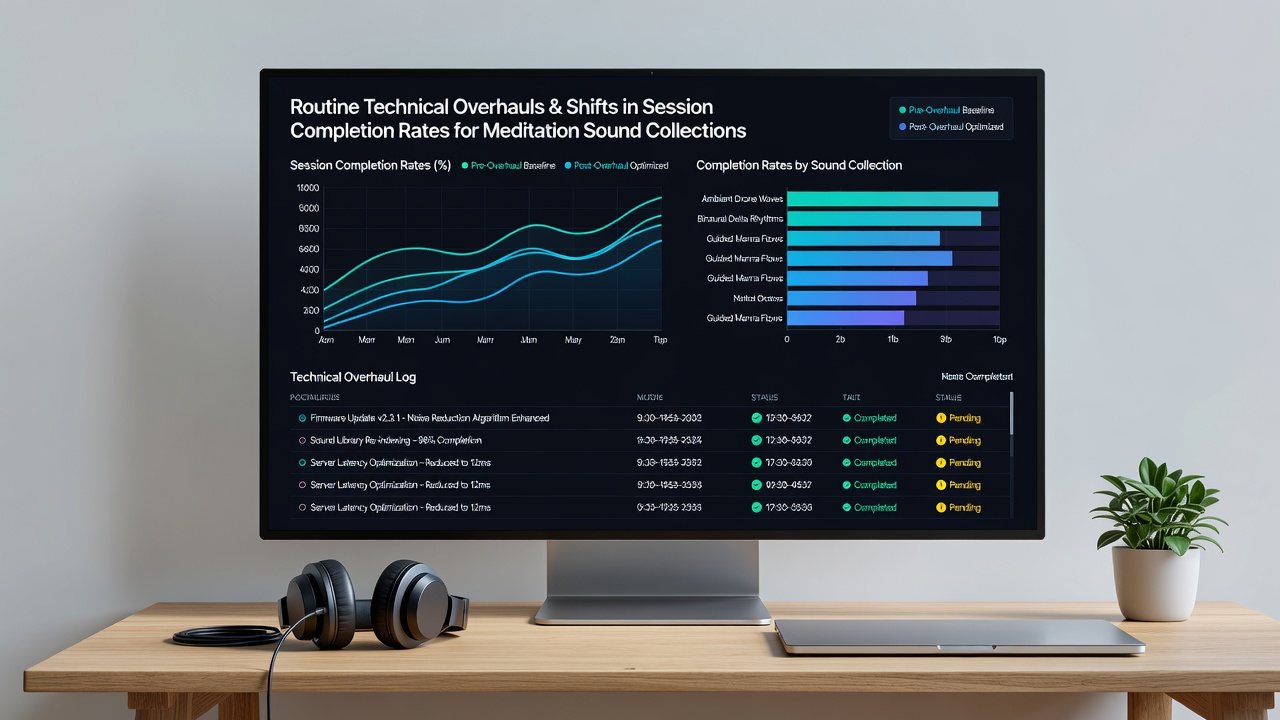
Research indicates that session completion rates for meditation sound collections fluctuate during and immediately after routine technical overhauls, as data from platform analytics shows drops ranging from 8 to 15 percent in the first 48 hours post-update. Those who've studied user behavior patterns find that interruptions in audio buffering or changes to progress tracking interfaces often prompt users to exit sessions early, particularly when collections involve layered soundscapes exceeding 20 minutes in length. Experts have observed that completion rates stabilize within one to two weeks once caching mechanisms adjust and users adapt to revised navigation flows.
Figures reveal that platforms handling over 500,000 monthly active sessions report average completion rates of 72 percent prior to overhauls, yet these numbers dip during migration periods before rebounding. Data shows that sound collections categorized as ambient nature tracks maintain higher resilience compared to guided voice sessions, since the former rely less on real-time synchronization with user inputs.
Factors Influencing Rate Shifts
Multiple elements contribute to observed changes, including alterations in content delivery networks, updates to mobile operating system compatibility layers, and refinements in session logging functions. Researchers discovered that when overhauls incorporate new audio encoding standards, older devices experience increased latency, which correlates with reduced completion among users on legacy hardware. Those who track wellness platform metrics note that evening sessions, typically peaking between 7 and 10 p.m. local time, show the most pronounced dips because network congestion compounds any technical adjustments.
What's interesting involves the role of push notifications and progress reminders, which sometimes misfire during transition windows and lead users to abandon collections midway. Studies found that applications employing A/B testing during overhauls gather precise data on which interface tweaks restore completion rates fastest, with some teams documenting recoveries to 78 percent within 14 days of implementation.
Regional Data and Industry Benchmarks
According to reports from the Australian Institute of Health and Welfare, wellness technology adoption in the Asia-Pacific region reached 34 percent of surveyed adults by mid-2026, with meditation sound platforms contributing significantly to those figures. Completion rate shifts appear consistent across markets, although users in regions with variable connectivity experience amplified effects from even minor server recalibrations. Industry organizations such as the Digital Wellness Association compile benchmarks that place average annual completion rates for sound-based meditation at 68 to 75 percent, highlighting how technical stability directly supports sustained engagement.
One study revealed that Canadian health researchers at the University of Toronto linked post-overhaul recovery periods to improved long-term retention when platforms communicate maintenance schedules in advance. Evidence suggests that transparent user communications reduce abrupt exits by as much as 11 percent during scheduled updates.
October 2026 Update Cycles
During October 2026, several meditation platforms executed backend migrations to support expanded sound libraries, and analytics indicated temporary completion rate reductions followed by gradual rebounds. Observers note that collections featuring binaural audio formats showed particular sensitivity to these changes because of higher bandwidth demands. Data from that period demonstrates how phased rollouts across user segments helped isolate variables and accelerate stabilization in affected regions.
Longer-Term Adjustments
Platforms that integrate user feedback loops after overhauls often achieve steadier completion trajectories, as adjustments to playback controls and offline caching address common pain points. Researchers discovered that sound collections updated with higher-fidelity tracks during maintenance windows sometimes attract renewed interest, offsetting initial dips through expanded variety. Those who've examined longitudinal trends find that consistent technical hygiene correlates with overall platform growth rather than isolated rate fluctuations.
Conclusion
Routine technical overhauls continue to shape session completion dynamics for meditation sound collections through direct impacts on streaming reliability and interface familiarity. Metrics collected across multiple platforms demonstrate that while short-term shifts occur, recovery patterns follow predictable timelines when engineering teams prioritize compatibility testing and user communication. Broader industry data underscores the connection between infrastructure maintenance and sustained engagement in digital wellness tools, with regional variations reflecting differences in device ecosystems and network conditions.